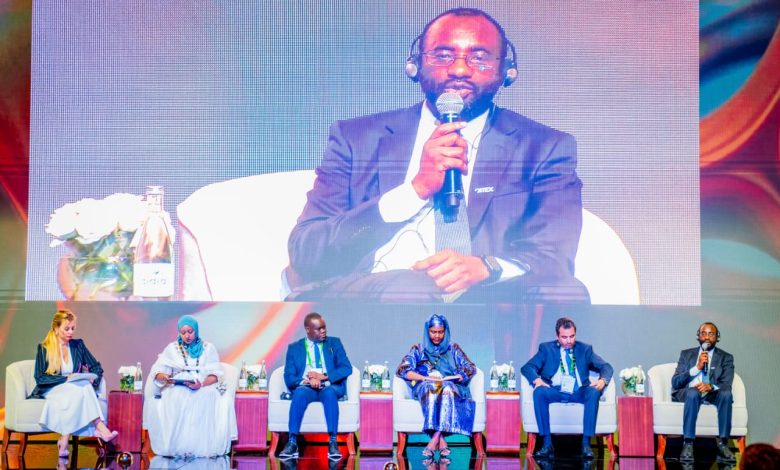
The Director-General of the National Information Technology Development Agency (NITDA), Kashifu Inuwa, has raised concerns over the evolving nature of digital warfare, stressing that Nigeria’s survival in the digital age now depends on a strategic combination of policy, skilled personnel, and proactive defense mechanisms.
Speaking during a panel session on Cyber Resilience at the 2026 GITEX Africa Summit, Inuwa described the global digital landscape as being at a “critical turning point.” He noted that emerging technologies are not only transforming industries and economies but are also reshaping cyber threats in ways that demand a more comprehensive and forward-looking response.
He emphasized that cybersecurity has moved beyond being a purely technical concern to becoming a key pillar of national development. According to him, governments, institutions, and individuals must adopt a broader approach that integrates people, processes, regulations, and infrastructure.
Inuwa disclosed that Nigeria’s cyber strategy is increasingly shifting its focus from advanced software systems to the individuals who operate them. Citing data that indicates 95 percent of digital breaches are caused by human error, he warned that even the most sophisticated technologies can fail if users are compromised.
He highlighted the importance of strengthening human capacity and digital literacy, noting that NITDA aims to transform citizens into a “human firewall.” This approach, he said, positions individuals as the first and most critical line of defense against rising threats, including those driven by artificial intelligence.
To support this goal, the Federal Government has launched a National Digital Literacy Programme aimed at achieving 95 percent digital literacy by 2030, with an interim milestone of 70 percent by 2027. The initiative places strong emphasis on cybersecurity awareness and responsible digital practices.
Inuwa also pointed to the “3 Million Tech Talent” programme as a key initiative to build local expertise in areas such as cybersecurity, data science, and artificial intelligence. He explained that the programme uses hackathons, innovation challenges, and mentorship opportunities to channel the energy of young Nigerians into productive and lawful ventures.
He stressed the need for strong collaboration between the public and private sectors to enhance cyber resilience. According to him, securing critical infrastructure and building a globally competitive digital economy will require a unified effort that combines technology, regulation, and human capacity.