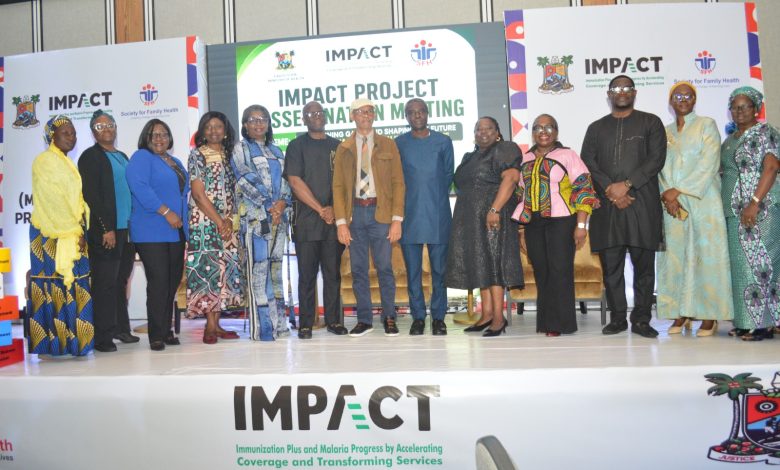
The Lagos State Government has revealed that only about five per cent of fever cases in the state are caused by malaria, directing healthcare providers to adopt evidence-based diagnosis before treatment.
Commissioner for Health, Prof. Akin Abayomi, made the disclosure at the dissemination meeting of the World Bank-supported IMPACT Project implemented by the Society for Family Health in partnership with the Lagos State Ministry of Health.

Abayomi said the findings had changed the understanding of fever management in Lagos, stressing that the assumption that every fever is malaria has led to misdiagnosis and delayed treatment of other illnesses.
He said all public primary and secondary health facilities had been directed to treat malaria only after positive Rapid Diagnostic Tests (RDTs). He added that inspections showed a significant drop in malaria diagnoses following the policy.
The commissioner warned that treating patients for malaria despite negative tests could have fatal consequences, noting that diagnosis must come before treatment.
Society for Family Health Group CEO, Dr. Omokhudu Idogho, said the project supported malaria diagnosis for over two million patients across 603 health facilities, with more than 50,000 confirmed cases receiving free treatment. He added that malaria test positivity declined from 43 per cent to 29.2 per cent during the project.
He said the project’s major achievement was promoting the “test before treatment” approach, which helps prevent missed diagnoses and inappropriate medicine use.

Permanent Secretary of the Lagos State Ministry of Health, Dr. Dayo Lajide, said the project strengthened malaria prevention, diagnosis and treatment services across the state, contributing to a decline in malaria prevalence to about 2.6 per cent in 2025.
World Bank representative Dr. Onoriode Ezire praised Lagos for generating evidence that is shaping health policy, while Prof. Wellington Oyibo said malaria test positivity among fever patients was about five per cent, with Rapid Diagnostic Tests showing high reliability.
SFH Advisory Services Managing Director, Dr. Jennifer Anyanti, said the project also supported healthcare worker training, medicine supply, community awareness and improved access to malaria testing.
State Malaria Elimination Programme Project Manager, Dr. Abimbola Oshinowo, said 1,279 healthcare workers were trained, malaria testing coverage rose to 98.3 per cent, and community campaigns reached over 1.38 million residents.
Executive Secretary of the Health Facility Monitoring and Accreditation Agency, Dr. Victoria Egunjobi, said the project equipped healthcare workers with evidence to improve diagnosis and reassure patients that not every fever is malaria.