2027: Beyond “Tinubu Must Go”, What Is the Opposition’s Alternative? – By Seye Oladejo

There is something increasingly fascinating about Nigeria’s opposition as we approach the 2027 general elections.
Everybody appears to know what is wrong with President Bola Ahmed Tinubu’s administration.
Everybody appears to know why the All Progressives Congress (APC) should be defeated.
Everybody appears to know why Nigerians are supposedly yearning for a change.
But ask the more important question – what exactly is the alternative?
Suddenly, the political orchestra becomes remarkably quiet.
This is not a defence of the APC against criticism. It is a challenge to the opposition to raise the quality of the democratic conversation.
Democracy is not merely about changing the occupants of Aso Rock. It is about competing visions of how to govern Nigeria.
The opposition must therefore answer a simple question: Beyond “Tinubu must go”, what exactly will you do differently?
That is the question Nigerians should be asking.
Politics of Anger Is Not a Policy
For some time now, the opposition has perfected the art of amplifying public frustrations.
Yes, Nigerians are experiencing hardship.
Yes, the cost of living remains a serious concern.
Yes, insecurity remains a challenge.
Yes, unemployment, infrastructure deficits and the pressure on household incomes require urgent attention.
Nobody in government should pretend otherwise.
But identifying a problem is not the same thing as solving it.
The easiest job in politics is to stand outside government and announce that everything inside government is wrong.
The harder job is to sit at the table, examine the numbers, make difficult choices and accept responsibility for the consequences.
That is governance.
And that is precisely where the opposition’s policy deficit becomes glaring.
What Is the Alternative to Reform?
Take the removal of fuel subsidy.
The opposition has repeatedly criticised the policy and its consequences.
Fine.
But Nigerians deserve more than criticism.
Would they restore the subsidy?
If yes, how would they finance it?
If no, what would they do differently?
What would they do about the distortions, leakages and incentives that characterised the old arrangement?
Would they return Nigeria to a system in which government spends enormous resources keeping the pump price artificially low while critical public services compete for scarce resources?
Or do they have a completely different model?
The same question applies to foreign-exchange reform.
If the opposition believes that the current approach is wrong, Nigerians deserve to see its alternative exchange-rate architecture.
How would it stabilise the naira?
How would it attract investment?
How would it increase exports?
How would it protect foreign reserves?
How would it deal with the structural imbalance between demand for dollars and Nigeria’s capacity to earn them?
“We will fix the economy” is not an economic policy.
It is a campaign slogan.
Nigeria has had enough slogans.
Atiku, Obi and the Opposition’s Policy Paradox.
The political movements around former Vice President Atiku Abubakar and former Anambra State Governor Peter Obi provide a useful illustration of the challenge.
Atiku’s ADC has articulated elements of an economic rescue programme, including its position on petrol subsidy, the naira, refineries, electoral reform and corruption.
Peter Obi and Rabiu Kwankwaso, meanwhile, have moved into the Nigeria Democratic Congress (NDC), following the breakdown of the earlier opposition configuration around the ADC.
These are significant political developments.
But political realignment is not the same thing as policy realignment.
Changing platforms does not automatically produce a governing philosophy.
Moving from ADC to NDC does not answer the question of how Nigeria should be governed.
Changing presidential combinations does not create jobs.
Coalition negotiations do not put food on the table.
A new acronym does not strengthen the naira.
And political arithmetic is not economic policy.
The opposition must therefore tell Nigerians what binds its various tendencies together beyond the desire to defeat President Tinubu.
Because if the only glue holding a coalition together is “Anybody But Tinubu”, what happens the morning after victory?
A Coalition Needs More Than a Common Enemy
The ongoing opposition coalition discussions have themselves exposed this problem.
There have been efforts to bring opposition forces together around a common presidential candidate and a shared programme. Yet the process continues to encounter questions over leadership, candidate selection, party structures and political interests.
There is nothing unusual about political negotiations.
But Nigerians should be concerned if political leaders can spend months negotiating who should fly the presidential flag while spending considerably less time explaining what the flag represents.
A coalition needs a common destination, not merely a common enemy.
What is their position on subsidy?
What is their position on taxation?
What is their position on federalism?
What is their position on state police?
What is their position on local government autonomy?
What is their position on power-sector reform?
What is their industrial policy?
What is their agricultural strategy?
What is their plan for Nigeria’s burgeoning digital economy?
What is their strategy for attracting investment?
What is their plan for managing public debt?
How will they fund the promises they are making?
These are the issues that should dominate the 2027 conversation.
The Opposition Cannot Have It Both Ways
One cannot promise everything to everybody.
You cannot simultaneously promise massive government spending, lower taxes, cheaper fuel, stronger social protection, higher salaries, massive infrastructure investment and fiscal discipline without explaining the mathematics.
Nigeria’s resources are finite.
Government revenue is finite.
Borrowing capacity is finite.
And the patience of the Nigerian taxpayer is certainly not infinite.
Every policy has a cost.
Every subsidy has an opportunity cost.
Every government programme requires funding.
Every election promise eventually meets the accountant.
This is why Nigerians should demand costed manifestos rather than beautifully packaged political rhetoric.
Tell us what you will do.
Tell us how much it will cost.
Tell us where the money will come from.
Tell us the timeline.
Tell us what success will look like.
And, most importantly, tell us what you will do if your plan fails.
That is how mature democracies conduct elections.
The APC Should Not Become Complacent
But let me make one thing abundantly clear: the weakness of the opposition is not an excuse for the APC to become complacent.
There is no doctrine in democracy called the “Invincibility of the Ruling Party.”
Absolutely nothing can be taken for granted.
The APC must earn the confidence of Nigerians every single day.
The Tinubu administration must continue to address the pain accompanying economic reforms, strengthen social protection, improve security, expand opportunities and demonstrate that the difficult choices being made today are laying the foundation for a more productive and prosperous Nigeria tomorrow.
The government must also communicate better.
Where policies are working, Nigerians should know.
Where they are not working, government should acknowledge it and make corrections.
Where sacrifices are unavoidable, government must explain why and demonstrate that the burden is being fairly shared.
The ultimate defence of any government is not propaganda.
It is performance.
2027 Should Be a Contest of Ideas
The opposition has every constitutional right to seek power.
Atiku can seek the presidency.
Obi can seek the presidency.
Other candidates can seek the presidency.
Coalitions can be formed.
Parties can merge.
Political alliances can emerge and disappear.
That is democracy.
But Nigerians must not be reduced to spectators at an endless game of political musical chairs.
The real issue is not who occupies which political platform.
The real issue is what they intend to do with the power they are seeking.
If the opposition believes Tinubu’s reforms are wrong, show us the alternative.
If it believes Nigeria’s economy is on the wrong trajectory, present the alternative trajectory.
If it believes insecurity is being inadequately handled, publish its security blueprint.
If it believes unemployment is unacceptable, show us the job-creation strategy.
If it believes poverty is increasing, explain how its policies will sustainably reverse it.
If it believes corruption remains endemic, explain precisely how it will reform the institutions that permit it.
If it believes Nigeria requires restructuring, tell Nigerians exactly what restructuring means.
No more political shorthand.
No more convenient generalisations.
No more “we will fix everything” politics.
The Nigerian Voter Is Not Looking for a Slogan
The Nigerian voter is becoming increasingly sophisticated.
He may be hungry, but he is not stupid.
She may be angry, but she can still ask questions.
Young Nigerians may be impatient, but they understand that hashtags cannot run an economy.
The market woman wants to know whether prices will stabilise.
The graduate wants to know where the job is.
The entrepreneur wants electricity, credit and a predictable business environment.
The farmer wants security, infrastructure and access to markets. The worker wants wages that can keep pace with reality. The investor wants certainty. The family wants security. The country wants leadership. None of these needs can be satisfied by political permutations alone. Let the Opposition Come to the Table
Rather than spending the next few months merely telling Nigerians why President Tinubu should be defeated, the opposition should tell Nigerians why it deserves to win.
There is a world of difference. The first is a negative proposition. The second is a positive one. The first requires anger. The second requires competence. The first needs an enemy. The second needs a vision. And Nigeria desperately needs the latter.
I therefore challenge the opposition: bring your alternative policies to the table.
Let Nigerians compare. Let us compare economic policies. Let us compare security strategies. Let us compare healthcare plans. Let us compare education policies. Let us compare infrastructure blueprints. Let us compare job-creation strategies. Let us compare the numbers. Let Nigerians decide. The APC should not be afraid of such a contest. Indeed, we welcome it.
Because at the end of the day, 2027 should not be reduced to a contest between “Tinubu Must Go” and “Tinubu Must Stay.”
It should be a contest between one governing vision and another.
And if the opposition believes it has a better vision for Nigeria, this is the time to bring it forward.
Nigerians are listening. The question is: does the opposition have anything new to say?
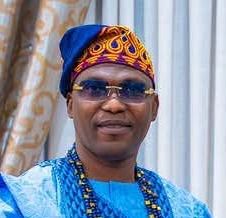
Mogaji (Hon) Oladejo, a chieftain of the Lagos APC