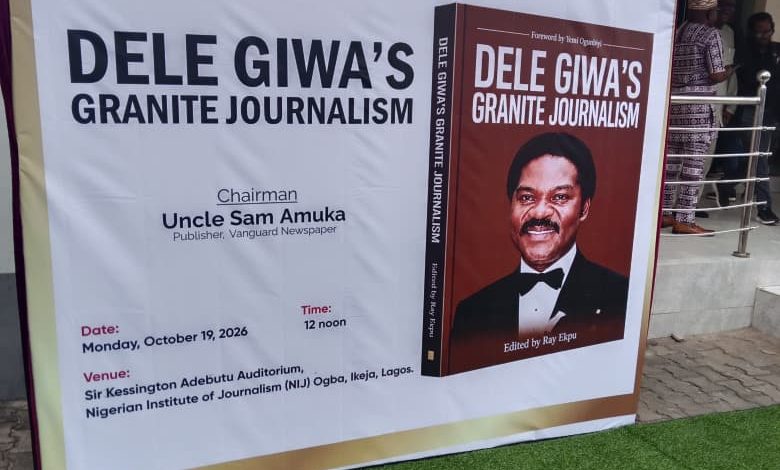
The family and close associates of the late investigative journalist, Dele Giwa, have recounted his final moments, 40 years after his assassination, while reflecting on his enduring legacy in Nigerian journalism.
Giwa was killed by a parcel bomb that exploded at his residence in Ikeja, Lagos, on October 19, 1986. Despite efforts to save his life, he succumbed to his injuries hours after the blast in one of the darkest episodes in Nigeria’s media history.
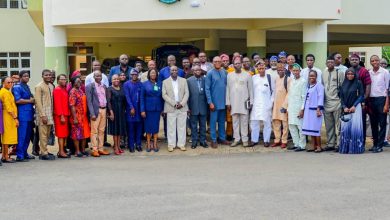
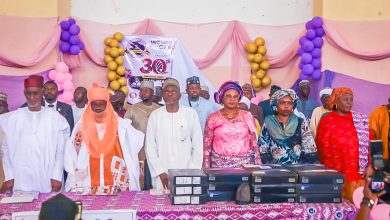
On Monday, family members, colleagues and associates gathered at the Nigerian Institute of Journalism (NIJ), Lagos, to commemorate his legacy and launch a book titled Dele Giwa’s Granite Journalism. The event also provided an opportunity for those who witnessed the aftermath of the bombing to recount his final moments.
Speaking at the event, Dokun Adedeji, the medical doctor who treated Giwa before his death, recalled that the journalist remained hopeful of surviving despite the severity of his injuries.
“It was about 12:30 on Sunday afternoon when a company bus was driven into First Foundation Medical Centre, Opebi, Ikeja. I was the doctor on duty for the weekend. I saw people running, saying that they brought Dele Giwa. So, we took Uncle Dele to the emergency room. What I saw, I have never seen again in my practice. He was shattered. His two limbs were open, and he was bleeding. But he was still talking. I told him not to talk so that we could conserve him. He said, ‘Dokun, I hope I will not die,’ and I responded that I didn’t know. Although I knew his death was imminent, I couldn’t tell him. He later said, ‘Dokun, I will not die, I will survive it,’” Adedeji recalled.
The doctor said he later concluded that death had spared Giwa the prolonged suffering he might have endured had he survived the injuries.
“I was shaking, but we kept on, and I remember Uncle Ray came in and brought his patella from home. One thing was sure. I think it was better that he died. There was no way Uncle Dele would have lived with that injury even if he lived. He died around 1 p.m. His blood was on my clothes and my shoes. I hung them for five years in the corner of my room, so that every time I saw them, I would remember,” he said.
Reflecting on their relationship, Adedeji said Giwa was more than a patient to him, describing him as a brother who treated him like family.
He added that Giwa repeatedly asked about his wife, Funmi, and his youngest daughter, Aisha, who had crawled into the dining area after the parcel bomb exploded.
Also recounting the incident, Nosa Igiebor of Newswatch magazine said he was in the office preparing for a 1 p.m. editorial meeting when he received an emergency call from Kayode Soyinka.
Igiebor recalled visiting Giwa’s residence after the explosion, where he witnessed the gruesome aftermath, with blood splattered across the journalist’s study and his kneecap resting against a wall.
He said he later proceeded to the hospital, where he received the news of Giwa’s death. Expressing anguish over the circumstances of the killing, Igiebor questioned how anyone could contemplate taking another person’s life in such a gruesome manner.
He also disclosed that Soyinka, who narrowly escaped the blast but sustained injuries, continued to suffer trauma from the incident.
Paying tribute to the slain journalist, Igiebor said: “For me, Dele cannot die. He was an enigma, journalism personified. He was the voice for journalism.”
In his goodwill message, Muyiwa Akintunde, President of the NIJ Alumni Association, recalled a lecture Giwa delivered at the institute seven months before his death.
According to Akintunde, Giwa’s guiding message to aspiring journalists was: “Journalism is a calling for those who couldn’t stand the truth being strangled.”
Media icon and former Ogun State Governor, Olusegun Osoba, also recalled that Giwa had expressed fears that some people were plotting against him before his assassination.
Osoba said they had visited the then Chief of Naval Staff, Admiral Augustus Aikhomu, to report the threats against the journalist, adding that Aikhomu had promised to intervene.
“We went to visit Aikhomu and told him about this threat, and he said he would do something about it. Eighteen hours after, I was woken up with a phone call that Dele Giwa was attacked. Giwa was awesome,” Osoba said.