From Rainbow To Shame: How Xenophobia Betrayed The South African Dream – Seye Oladejo

South Africa today stands at a dangerous crossroads of its own making. Once celebrated as the Rainbow Nation and the undisputed economic powerhouse of Africa, it now finds itself grappling with the predictable consequences of years of populist politics, economic mismanagement, rising intolerance and self-inflicted diplomatic isolation.
Nigeria, and indeed the rest of Africa, should watch events unfolding in South Africa with keen interest-not out of schadenfreude, but as a lesson in how quickly a nation can squander decades of goodwill and continental leadership.
The recent resurgence of xenophobic policies and sentiments, particularly those targeted at African migrants, has once again exposed the contradiction at the heart of post-apartheid South Africa. A nation that once appealed to the conscience of the world against racial discrimination has increasingly become intolerant of fellow Africans who stood shoulder-to-shoulder with it during its darkest years.
History is stubborn.
Many appear to have forgotten that Nigeria was among the foremost countries that financed the anti-apartheid struggle. Successive Nigerian governments committed enormous financial, diplomatic and political resources to the liberation of South Africa. Nigerian workers voluntarily contributed through the Southern African Relief Fund. Scholarships were offered. Sanctions against the apartheid regime were vigorously championed. Nelson Mandela himself repeatedly acknowledged Nigeria’s immense sacrifices.
Sadly, the current disposition of sections of the South African political establishment suggests that history has become an inconvenient memory.
Unable to confront the structural causes of unemployment, crime, poor service delivery and widening inequality, some politicians have found an easy scapegoat in foreign Africans. Rather than fixing broken institutions, they have chosen to weaponize nationality. Instead of implementing reforms capable of stimulating economic growth, they have embraced exclusionary rhetoric designed to harvest cheap political capital.
Such politics may deliver temporary applause at campaign rallies, but it rarely solves economic problems.
The irony is unmistakable.
South Africa desperately needs investment, innovation, skilled manpower and stronger regional integration to revive its struggling economy. Yet, by projecting hostility towards fellow Africans, it risks frightening away the very entrepreneurs, professionals and investors capable of contributing to its recovery.
No economy grows in isolation.
No country prospers by criminalizing enterprise simply because it is owned by foreigners.
No society becomes globally competitive by erecting psychological walls against its neighbours.
The long-term victims of xenophobia are not migrants alone. They are South African workers, businesses, consumers and future generations who inherit a shrinking economy and diminished international reputation.
Already, investor confidence has been weakened by recurring episodes of anti-foreigner violence. Tourism suffers whenever disturbing images of attacks on foreign nationals dominate global headlines. Regional trade relationships become strained. Diplomatic goodwill painstakingly built over decades gradually evaporates.
Perhaps even more damaging is the erosion of South Africa’s moral authority.
A country that once inspired the world through Nelson Mandela’s message of reconciliation now risks being remembered for periodic outbreaks of intolerance against fellow Africans.
This is not merely a public relations problem.
It is a profound leadership challenge.
Africa’s future lies not in isolation but in integration. The African Continental Free Trade Area (AfCFTA) represents one of the continent’s greatest economic opportunities. Its success depends on the free movement of goods, services, capital and people-not periodic campaigns that portray fellow Africans as economic enemies.
South Africa cannot simultaneously aspire to continental leadership while undermining the very spirit of African solidarity upon which such leadership rests.
The economic centre of gravity on the continent is gradually shifting.
Countries like Nigeria, despite their own challenges, are implementing difficult but necessary reforms aimed at attracting investment, strengthening infrastructure, expanding economic opportunities and restoring macroeconomic stability. International investors increasingly evaluate African destinations on the basis of policy consistency, openness and long-term stability.
In this emerging competition, countries that embrace regional cooperation will outperform those consumed by nationalist populism.
South Africa still possesses enormous strengths-world-class financial institutions, sophisticated infrastructure, deep capital markets and exceptional human capital. These advantages, however, cannot indefinitely compensate for poor policy choices and recurring political intolerance.
The warning signs are becoming increasingly difficult to ignore.
But there is another side to this conversation that South Africa’s political class would do well to contemplate.
For years, Nigeria and the rest of Africa have responded to repeated episodes of xenophobic violence with remarkable restraint. We have chosen diplomacy over retaliation, Pan-Africanism over populism and brotherhood over bitterness. That restraint, however, should never be mistaken for weakness.
Let us, for a moment, imagine the tables turned.
Suppose Africa, beginning with Nigeria, decided to pay South Africa back in its own coin. Suppose Nigerians demanded reciprocal restrictions on South African businesses and investments. Suppose governments across the continent concluded that if South Africans could discriminate against fellow Africans within their borders, then South African commercial interests should no longer enjoy unrestricted access to African markets.
Who would blink first?
The answer is neither difficult nor flattering.
South Africa’s corporate footprint across Africa-and particularly in Nigeria-is one of the pillars of its economic influence on the continent. Companies such as MTN Nigeria, MultiChoice (DStv and GOtv), Stanbic IBTC, Pep, Mediclinic and several South African manufacturing, hospitality and financial services firms have generated enormous wealth from African markets. Nigeria remains one of the largest and most profitable destinations for South African investments, contributing billions of dollars annually to their revenues and shareholder value.
The uncomfortable truth is that these companies have prospered because Nigeria has maintained one of Africa’s most open investment environments. While Nigerians have repeatedly watched fellow Africans brutalized on South African streets, South African businesses have continued to enjoy unrestricted access to our market, our consumers and our economic opportunities.
Now imagine a different scenario.
Imagine Nigerian consumers deciding, through their purchasing choices, to patronize indigenous alternatives. Imagine policymakers reviewing bilateral commercial arrangements through the principle of reciprocity. Imagine governments across Africa insisting that countries unwilling to protect fellow Africans cannot indefinitely expect unrestricted commercial privileges from them.
The consequences would be immediate and profound.
Economically, South African multinational corporations would confront declining revenues, shrinking market share, weakened investor confidence and pressure on their share prices. Reduced earnings from Nigeria and other African markets would reverberate through the Johannesburg Stock Exchange, affect pension funds, constrain future investments and ultimately threaten jobs back home in South Africa. Ironically, the greatest casualties would not be foreign migrants but ordinary South Africans whose livelihoods depend on businesses flourishing across Africa.
Diplomatically, Pretoria’s standing within the African Union and across the continent would suffer a severe blow. A nation that appears unwilling to embrace fellow Africans cannot convincingly claim the moral authority to lead Africa. The immense goodwill earned during the anti-apartheid struggle and the Mandela years could be squandered by the politics of exclusion.
Politically, the consequences would be equally sobering. Leaders who have found electoral convenience in blaming foreigners would soon have to explain to their own citizens why African markets are shrinking, investments are declining, tourism is falling and South Africa is becoming increasingly isolated. Populist rhetoric may win applause at campaign rallies, but it cannot replace lost export earnings or restore damaged diplomatic relationships.
Fortunately, Nigeria has consistently chosen the higher road. Despite repeated provocations, we have resisted the temptation to institutionalize retaliation because we remain committed to the ideals of African unity, mutual respect and economic integration. We understand that two wrongs do not make a right.
Yet, South Africa must never mistake maturity for weakness or goodwill for an inexhaustible resource. Reciprocity remains a cardinal principle of international relations. A nation that expects unrestricted access to African markets while creating a hostile environment for African people within its own borders advances a contradiction that cannot endure forever.
The lesson for Africa is equally clear.
Economic frustration should never become an excuse for xenophobia. Governments exist to solve problems, not manufacture scapegoats. Leadership demands the courage to confront difficult realities rather than exploiting prejudice for political gain.
As Nigerians, we must continue to resist the temptation of bitterness or reciprocal hostility. Our relationship with South Africa transcends temporary political tensions, and millions of ordinary South Africans reject xenophobia and continue to value the historic bonds between our peoples.
Nevertheless, friendship also demands honesty.
South Africa must rediscover the values that once made it a beacon of hope across Africa. It must reject the politics of division, rebuild trust with its neighbours and embrace the inclusive economic vision capable of restoring its continental leadership.
Until then, the greatest casualty of xenophobia will not be the African migrant seeking opportunity.
It will be South Africa itself. So, weep not for South Africa.
History teaches that nations ultimately harvest what they sow. Nations that replace solidarity with suspicion, openness with exclusion and visionary leadership with narrow populism eventually discover that the heaviest price is paid not by outsiders-but by their own people.
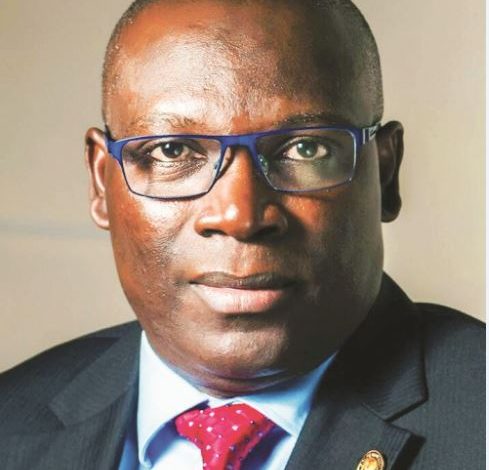
Mogaji (Hon) Oladejo, a Chieftain of the Lagos APC