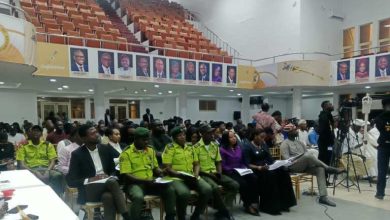
The Federal Government of Nigeria and the Edo State Government have sensitised stakeholders across the South-South geopolitical zone on the National Adaptation Plan (NAP), a strategic framework designed to strengthen climate resilience and prepare vulnerable communities for the growing impacts of climate change.
The sensitisation workshop, organised by the Federal Ministry of Environment through its Department of Climate Change, was held at the John Odigie-Oyegun Public Service Academy (JOOPSA) in Benin City, Edo State. The event brought together key stakeholders to discuss adaptation strategies and collaborative approaches to addressing climate challenges.
Speaking at the workshop, the Edo State Commissioner for Environment and Sustainability, Nosa Adams, represented by the Permanent Secretary of the Ministry of Environment and Sustainability, Mrs. Edith Ebomoyi, stressed that climate change adaptation is no longer optional but an urgent necessity. He cited reports by the United Nations Framework Convention on Climate Change (UNFCCC), which indicate that nearly half of the world’s population remains vulnerable to climate-related hazards.
Adams said that these hazards include floods, droughts, storms, heat stress and food insecurity, noting that proactive adaptation measures are critical to reducing the risks posed by these challenges.
The commissioner highlighted several adaptation initiatives being implemented by the Edo State Government, saying the initiatives are aimed at protecting lives, property and livelihoods while enhancing environmental sustainability.
Adams also advocated increased financing for climate adaptation efforts, noting that developing countries are projected to require about $387 billion annually by 2030 to effectively address adaptation needs.
He further urged communities, civil society organisations and other stakeholders to intensify climate awareness campaigns and prioritise resilience-building initiatives across all sectors, saying collective action is essential to ensuring communities are better prepared for the impacts of climate change.
Declaring the workshop open, the Permanent Secretary of the Federal Ministry of Environment, Dr. Salihu Aminu Usman, represented by the Director of the Department of Climate Change, Dr. Iniobong Abiola-Awe, described climate change as one of the greatest challenges facing humanity, noting that Nigeria remains particularly vulnerable to climate-induced shocks such as flooding, drought, desertification, rising sea levels, food insecurity and public health threats.