Reps Majority Leader, Ado-Doguwa Welcomes 28th Child, Plans To Produce More Children


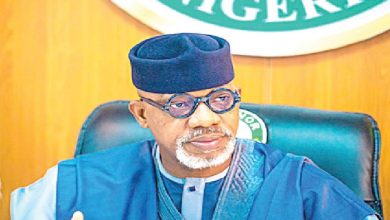
The House of Representatives Majority Leader, Hon Alhassan Ado-Doguwa, has welcomed his 28th child.
Doguwa (APC-Kano) disclosed this in Abuja at the plenary session on Tuesday while responding to a congratulatory comment from the House Minority Leader, Ndudi Elumelu (PDP-Delta).
The elated house leader promised that he will still produce more as he is still active and prepared to have 30 children before the 2023 elections.
According to him, “this is no longer news. It is no longer news because this thing happened in the last 24 hours. It is true that my beloved family has gotten an additional one person. It is a bouncing baby girl.
“The mother and the baby are hale and hearty. The husband is still active. I am here and I thank God that I kept my word with the House that while I had 27 I promised you that I would continue counting. By the grace of God and your prayers, the count would continue.
“Now that we are considering the Electoral Act amendment and when we get to the floor perhaps in the Committee of the Whole, I would appeal to my members so that we suspend relevant rules and we have a clause in the Electoral Act where it permits families that do have up to 30 kids in their comes to have an electoral polling unit in that family.”
He said this remain his target.
When the Speaker, Femi Gbajbiamila, asked if he was working towards a polling unit in his house with two to go, Ado-Doguwa said: “At least between now and 2023 before the elections come, if you allow that, then I would have a polling unit within my home.”
The lawmaker who represents Doguwa/Tudun Wada Federal Constituency presently has four wives.