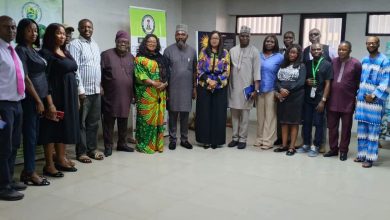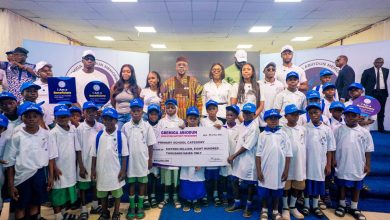
The Senator representing Lagos-West District in the Senate, Sen. Idiat Adebule has called on the Lagos State House of Assembly to fast-track the passage of the Lagos Innovation Bill, which would enhance Innovation and research activities in the State.
Adebule made this call in her keynote address at the 7th Lagos State University Research and Innovation Fair themed “Promoting the Quadruple Helix Collaboration: Government, University, Industry and Community”, held at Aderemi Makanjuola Lecture Theatre, LASU Main Campus, Ojo, Lagos.
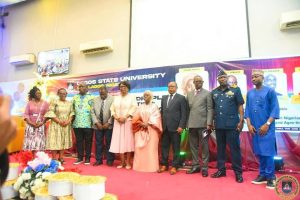
The Senator opined that the passage of the bill would benefit the university immensely, as researchers, innovators and scholars would have access to funds that would assist in providing advanced solutions to the challenges of the society, in the whole of Nigeria.
She advised captains of industry, as well as operators to make conscious effort to partner with all tertiary institutions and research laboratories by providing them with direction and focus for research and innovation that will not only be realistic and useful, but also socially responsible and capable of solving real-world problems through the feedback from their consumers on their products and consequently feed research centres.
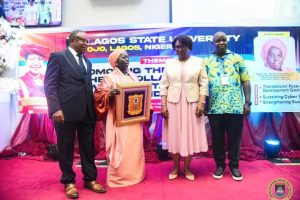
Similarly, the Chairman of the event, Sir David Sunmoni, noted that the theme was more than a framework but a great clarion call, which challenges all stakeholders to re-think how to generate, apply and share knowledge. He further advised all to build bridges between between policy and practice, as well as between research and relevance.
Meanwhile, in her opening address, the Chief Host and Vice Chancellor of the University, Prof. Olatunji Bello, remarked that the annual research is more than a mere academic exercise, but as the manifestation of the University’s deepest institutional dedication to moving beyond theoretical knowledge and translating the research into tangible solutions that drive development.

The Vice-Chancellor expressed that no single entity could tackle the complexities of sustainable development suddenly, having known that the traditional Triple Helix Model (University-Industry-Government) had evolved.
She affirmed that it is well understood at the University that research only achieves its maximum impact when it is grounded in the needs of the community, emphasising that the four helix model must be judiciously put into use at the Fair, as a resilient, collaborative structure.