Dolly Parton: At the Juncture Where Wisdom and Spirituality Meet Existence – by Tunji Olaopa

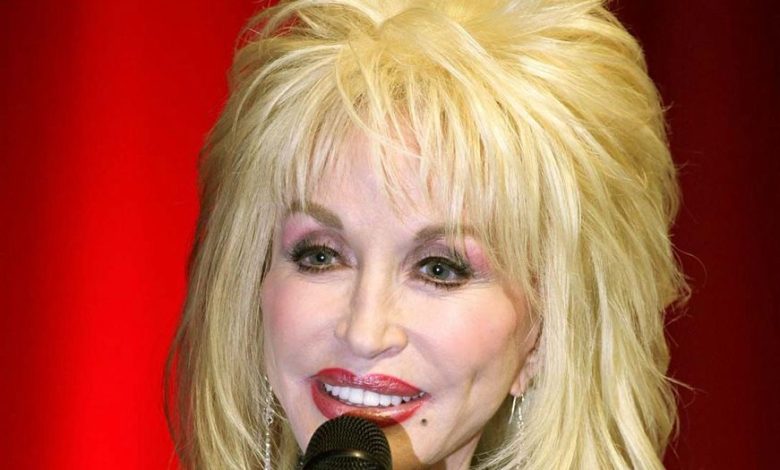
Dolly Parton was just simply a singer, a country musician; she was a force of nature that held her own niche against the most formidable of stars. At 80, she had lived a most meaningful and significant life. And that significance will be measured in the imprint her life, and most importantly her music, have left in the lives of millions all across the world. She was not a musician that was constrained by the limitation of country music, compared to, say, hip-hop or rap in the American music scene. Dolly Parton had a space of influence that reached far and wide.
The root of country music provides the beginning reflection about the depth of connection anyone could have with a country musician and the contents of her songs. With many traditional elements ranging from American folk music and African-American spirituals, to Irish gospel music and vaquero western music, country music combined critical components that makes it a unique genre all by itself. It is a genre that is well-suited to the elevation of family values which Dolly Parton benefitted from. She grew up within a family that took music seriously as both a valuable and spiritual endeavor.
She grew up singing folk songs that carry the burdens of family and communal aspirations and virtues, as well as the reckoning of what life means and brings. And yet, she had to make a decision to stay grounded in country music that does not appeal to the vast majority of people the same way other genres do. And yet, Parton not only stayed with that genre, but also revolutionize how people will take her own brand of country music.
That brand had to undermine not just the baggage of racism that country music was initially made for. It also had to challenge the thematic trope of love and the patriarchal perception of women that the male-dominated genre was working with. Dolly Parton changed all that. From her first album, Hello, I’m Dolly to “Jolene,” Parton began to systematically design her own understanding of country music that would make her one of its biggest stars. Indeed, she became so successful that millions who did not like country music love Dolly Parton’s version of it. And this is in no small measure due to her dogged commitment to deepening the scope and nuances of the thematic issues that characterize country music. She consistently reconfigured the image of the woman as exemplified in one of her evergreens, “Just Because I’m a Woman.” With “Jolene,” one of Dolly Parton’s most memorable songs, we come face to face not only with Parton’s creativity and humor, but also her ability to turn normal feeling—of joy, jealousy, envy, fear and anxiety into universal concerns that everyone listens to in song and can relate with. There was actually a red-haired bank teller who became interested in Dolly Parton’s husband, but her name was not Jolene. That name belonged to an eight-year-old red-haired girl who asked for Parton’s autograph. The combination of the girl’s name, the banker flirting with her husband, and the similarity in red-hair gave birth to one powerful song that many women—and men—could understand as not just an uncommon experience in love affairs but as emotional burden that must be endured.
I arrived at Dolly Parton from a deep connection with her lyrical narration of faith, family, country life, love and root. I had reasons to relate with memorable hit tracks like “The Seeker,” “Sacred Memories,” “Don’t Make Me Have to Come Down There,” “Hello God,” “In the Good Old Days (When Times Were Bad),” “Poor Folks’ Town,” “9 to 5,” “Coat of Many Colors,” “Jolene,” and more. My favorites are definitely “Coat of Many Colors,” “Hello God,” “Sacred Memories,” and her many ballads to love and loving. These were songs that resonates with my own trajectory of coming of age in a small town like Aáwé and my abiding connection with it; my sense of the deep awareness of my parents raising us as children; their determination to give us the best education rooted in values despite their grounding poverty, and my own attempts to understand the emotion of love, and more. There is also the rhythmic angle that Dolly Parton added to my search for the mystery of God and the Christian faith.
From her music, her background, her faith and other trajectories of living, Dolly Parton demonstrated the struggles of a woman who would make something tangible out of her life and become a success against all the odds that life could put on her path. From the context of crippling poverty and a lowly family upbringing in Tennessee, Parton began life with a deficit. Music could have become not just a measure of temporary joy but the framework for future aspirations that has God as a constant source of hope. Poverty and destitution would inevitably not be too significant a challenge to override her dignity and capacity to keep surging forward.
When I first heard “Coat of Many Colors,” I had a moment of instant connection with Dolly Parton’s poor background and the deep philosophical essence of the track. Wealth, joy and worth are not what we often think them to be, says the song.
The worth of that coat, for Parton, derives from the care, affection and love with which her mother weaves and lightens an old rag with many colors. Wealth is not due to the economic scale that the society places on material possessions and the validation that comes with it; rather, for her, it derives from the state of one’s spirit, and the choice one has to make about one’s state and status in life: “One is only poor if they choose to be.” And with this core message, it does not matter anymore whether her friends at school made fun of her or created a framework of social exclusion. It was sufficient for her that her mother dewed the rags of many colors into a suitable garment with love and devotion.
The universal theme of marginalization is one I found relatable, especially growing up as I did in a small town and not having the best that the world and one’s parents could possibly want to offer. With the track titled “My Tennessee Mountain Home,” it feels like I could swap childhood stories of a humble beginning with Dolly Parton. My homes at Okeho and Aáwé were both similar to her family’s small cabin apartment Great Smoky Mountains of East Tennessee. Her humble beginning mirrors my own postcolonial upbringing in a town that suffered huge infrastructural deficits with reliable electricity, modern highway, good water system and other significant elements that could have made the growing up of a child memorable in a different way. And yet, that growing up for me, and for her, was as memorable as what an idyllic country environment could afford in terms of peace, pure joy and an environment to develop mental, physical, spiritual and cultural characteristics without the ills of urbanization and modernity.
I suspect that Dolly Parton’s sense of the divine emerged from her rural coming of age. “Sacred Memories” and “Letter to Heaven” are just two of some of Parton’s memorable articulation of her awareness of divine influence and direction. The beauty of this awareness, expressed in “The Seeker,” is her ability to find the divine in a spiritual commitment to self, family and community. Dolly Parton’s understanding of the divine and the spiritual finds resonance in her commitment to her roots and the philosophical insights that such a commitment brings. You will look in vain for any hard theology about faith, heaven, hell, sacrament, etc. that clutter the mind. Sacredness is not a function of organized religious and institutional dogmas. On the contrary, it comes from a life imbued with humaneness, empathy, compassion and communal spirit of oneness and service.
In other words, Parton’s spiritual songs connect to a secular vision of the relationship between an individual and the community that enable us to see how her religious upbringing allowed her to grow her own understanding of what it means to be a spiritual being growing up within a family and communal setting where love, devotion, dignity and commitment constitute the hallmark of the manifestation of God’s presence and move.
In Dolly Parton’s corpus of singles and albums that spans over six decades, we have been blessed with a songwriter—or more precisely a songteller, to copy the title of her autobiography—whose songs and tracks chart several “simple little songs” that tell simple stories about the life, death, joy, emotions, family, religion, God, love and other crucial events and incidences in the everyday life of humans. With the guitars, banjos, fiddles, mandolins and a great voice and charismatic personality, Dolly Parton turned songs into stories and spoke to the challenges, aspirations and experiences of millions of people across continents.
She challenged us all to live simply, spiritually and with a deep sense of our commitment to parents and community. This, for me, constitutes her truest legacy, beyond the millions of copies that her many songs and albums sold over the decades she was active in music. She did not only cling to country music in defiance of its rejection, she forces us into an intimate consciousness of its capacity to force us to reflect about life, about death and about the afterlife. Rest well, dear Dolly.
Prof. Olaopa, Chairman Federal Civil Service Commission