Edo Strengthens Health Insurance System, Targets Wider Coverage, Faster Care Delivery

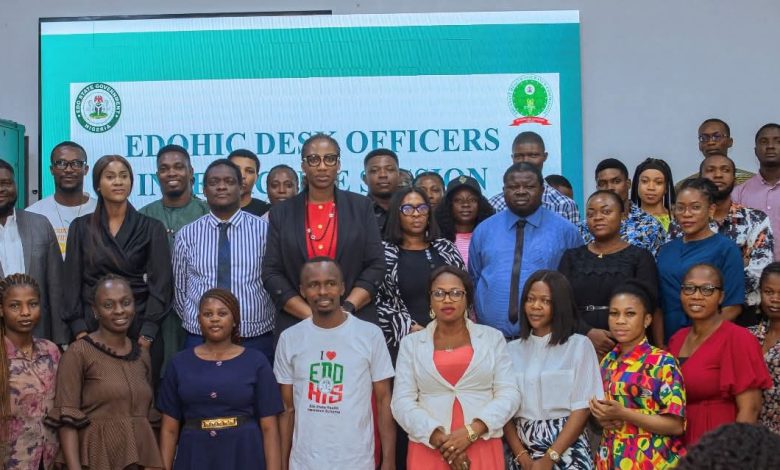
The Edo State Health Insurance Commission (EDOHIC) has reaffirmed its commitment to strengthening healthcare delivery across the state as it convened its Desk Officers’ Interactive Session, bringing together healthcare providers from the three senatorial districts to review achievements, challenges, and expectations for the coming year.
Speaking at the session in Benin City, the Director General of EDOHIC, Dr. (Mrs.) Augusta Ikpea-Enaholo, commended the collective efforts of healthcare providers under the Edo State Health Insurance Scheme. She noted that the collaboration between the Commission and facilities across the senatorial districts had resulted in visible improvements in patient coverage, responsiveness to care, and overall enrollee satisfaction in 2025.
Dr. Ikpea-Enaholo highlighted the exceptional performance of several facilities during the year, including public healthcare centres that strengthened their service processes and emergency response compliance. She also praised private facilities for maintaining high standards of patient-centred care and strict adherence to scheme protocols.
The DG further commended the Desk Officers, describing them as the frontline of patient–scheme engagement. She acknowledged their dedication and recognized outstanding officers whose professionalism enhanced service coordination and enrollee communication throughout the year. Despite the progress made, she stressed the need for continuous improvement, citing challenges such as disparities in patient outcomes across facilities, delays in service delivery, communication gaps regarding enrollee entitlements, and the need for better integration of health information systems.
She outlined key reforms implemented by EDOHIC in 2025, including the deployment of QR-code communication channels across facilities, strengthening of the claims pre-authorization system, introduction of the EDOHIC Emergency Protocol for enrollees, development of an Emergency Care Policy for healthcare facilities, launch of the Bills of Rights policy document, and rollout of the EDOHIC ID card for dependents. According to her, these interventions improved communication, claims turnaround time, emergency responsiveness, and enrollee verification statewide.
The interactive segment of the event, chaired by the DG, provided a platform for open discussion on service concerns and operational bottlenecks. Participants deliberated on issues such as escalation procedures for delayed or disputed claims, improved communication strategies for patient entitlements, and more efficient systems for monthly reporting and claims tracking.
In her closing remarks, Dr. Ikpea-Enaholo reiterated the Commission’s commitment to deepening provider engagement and strengthening the state’s health system. She encouraged facilities to uphold transparency, enhance responsiveness, and embrace innovation—particularly digital health tools and staff capacity-building—as Edo State prepares for expanded quality service delivery in 2026.
During a technical review session, representatives from the Directorate of Health Services and Standards, including Dr. Osayuki Edosa-Iyayi and Senior Medical Laboratory Scientist Mr. Ibrahim Okoro, presented the Quality Assurance Reports for the second and fourth quarters of 2025. The reports assessed facility compliance, emergency care readiness, documentation accuracy, claims credibility, processing timelines, and beneficiary feedback trends.
They emphasized that the assessments were crucial for identifying gaps and guiding corrective measures, adding that the Commission expects visible improvements across facilities by the end of the first quarter of 2026.