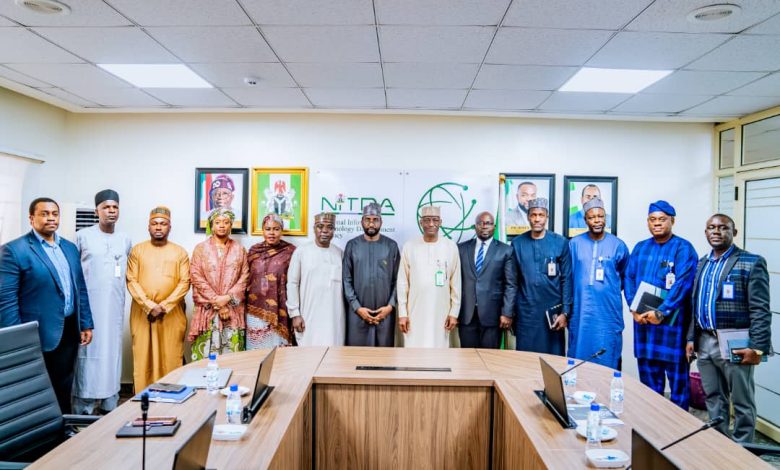
The National Information Technology Development Agency (NITDA) and the Nigerian Independent System Operator (NISO) are set to collaborate on initiatives aimed at accelerating digital transformation in Nigeria’s energy sector and enhancing the infrastructure needed to drive the country’s digital economy.
During a strategic meeting between the two organisations, the Director General of NITDA, Kashifu Inuwa, emphasised the importance of reliable electricity as a key driver of digital innovation, economic growth and national development.
He noted that as businesses and institutions increasingly embrace digital technologies, the power sector remains fundamental to sustaining digital progress, adding that access to stable electricity is essential for the growth of emerging technologies and digital services.
Inuwa commended NISO’s commitment to embedding technology into its operations from inception, describing the organisation’s approach as a forward-looking organisation capable of delivering long-term value to the electricity industry.
According to him, the rapid expansion of data centres, artificial intelligence and other digital infrastructure globally has made dependency on power supply a critical factor for attracting investment.
He stated that Nigeria stands to benefit significantly from the growing digital economy if it continues to improve electricity reliability while deploying technology to boost transparency, efficiency and accountability across the power ecosystem.
To facilitate implementation, Inuwa proposed the establishment of a joint technical team to identify priority projects and develop a practical framework for collaboration.
Earlier, the Managing Director and Chief Executive Officer of NISO, Engr Abdu Bello Mohammed, described the engagement as a significant step towards building a technology enabled electricity management system.
He explained that NISO was created following the unbundling of the Transmission Company of Nigeria and is responsible for system operations, electricity market administration and power system planning, while the Transmission Service Provider oversees the transmission infrastructure.
Mohammed said the organisation plays a central role in coordinating Nigeria’s electricity network, ensuring the efficient movement of power from generating stations through the transmission network to distribution companies while maintaining system stability.
As part of efforts to improve operational efficiency and visibility, he disclosed that NISO has begun deploying Internet of Things (IoT) enabled meters at strategic points across the electricity value chain.