…seeks to provide legal framework for both custodial, non-custodial measures
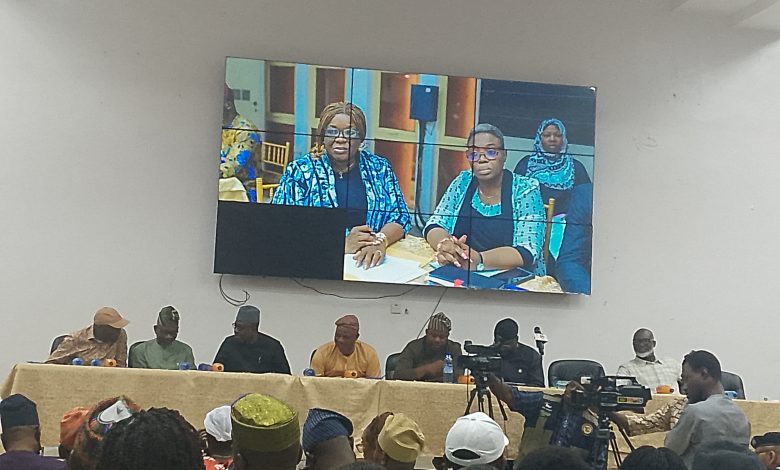
The Lagos State House of Assembly through its Committee On Judiciary, Public Petitions and LASIEC has organised a public hearing on a Bill to transform the state’s judicial system from punishment-focused to reform, rehabilitation, and reintegration.
The private member Bill titled ” Lagos State Correctional Services Bill 2025″, was sponsored by the Speaker of the House, Rt. (Hon). Mudashiru Obasa and had gone through the first and second reading.
The Bill seeks to provide a legal framework for both custodial and non-custodial measures to support the reintegration of offenders into society.
However, representing Speaker Obasa at the public hearing, Hon. Ajani Owolabi (Lagos Mainland 1) described the bill as a shift away from the outdated prison model toward a modern correctional system anchored in human dignity.
Chairman of the House Committee on Judiciary, Human Rights, Public Petitions, and LASIEC, Hon. Oladipo Ajomale, highlighted Nigeria’s overcrowded correctional facilities and the need for humane treatment of inmates and better reintegration structures, calling on the federal government to invest in more correctional facilities.
Presenting an overview of the Bill, the Majority Leader, Hon. Noheem Adams, said it contains 60 clauses including provisions for medical care, legal and family visitation, structured release procedures, and documentation to support post-release reintegration.
Attorney General and Commissioner for Justice, Mr. Lawal Pedro (SAN), praised the bill and suggested refining its title to distinguish between inmates in custody and those under correction. He also called for clearer definitions of custodial and non-custodial services.
Several stakeholders contributed recommendations, including Mahfuz Alabidun of the Inmates Educational Foundation, who called for partnerships with civil society and youth inclusion on correctional boards; and human rights lawyer Yusuf Temilola, who emphasised regulation of oversight bodies and post-release evaluation frameworks.
Other speakers, including court officials, religious representatives, correctional officers, and rehabilitation advocates, proposed adding transitional programmes, virtual hearings, mental health services, and infrastructure guidelines.