…sets common standards for innovation hubs nationwide
…targets decentralisation of innovation ecosystem for greater opportunities
The National Information Technology Development Agency (NITDA) has taken steps to establish common standards for innovation hubs across the country as part of efforts to decentralise Nigeria’s innovation ecosystem and create greater opportunities for young Nigerians to develop and scale technology-driven businesses within their local communities.
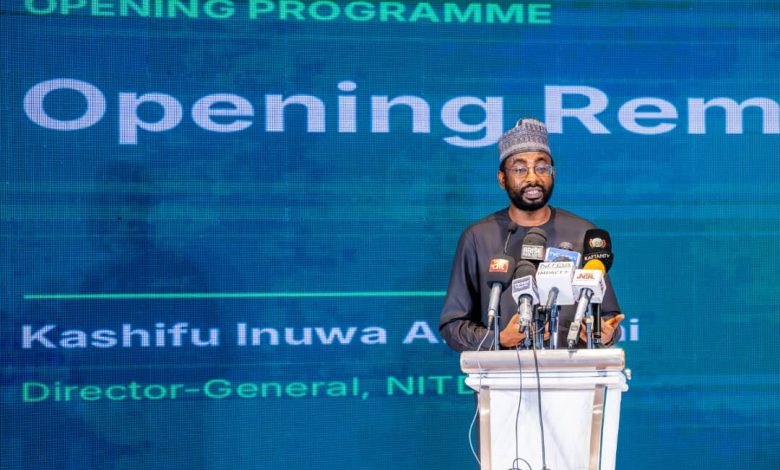
Speaking in Abuja at the National Innovation Hub Standards Framework Validation Workshop, NITDA Director-General, Kashifu Inuwa, said the proposed National Innovation Hub Standards Framework was designed to provide hubs with a structured pathway for assessing their capabilities, identifying gaps and progressing towards maturity, rather than imposing rigid requirements on operators.
Inuwa explained that innovation hubs had become critical platforms for bringing together innovators, students, entrepreneurs, investors, businesses, academia and government to exchange ideas, develop solutions and transform concepts into commercially viable enterprises.

The NITDA boss noted that Nigeria had an abundance of talented and entrepreneurial young people, but many still lacked access to funding, networks, mentorship, infrastructure and other support systems needed to translate their ideas into sustainable businesses.
He identified talent, risk capital, large corporate organisations and government as key pillars of a functional innovation ecosystem, stressing that stronger collaboration among stakeholders was necessary to build a sustainable digital economy.
Inuwa expressed concern that innovation activities remained largely concentrated in Lagos, Abuja and a few other states, despite the talent and innovation potential spread across the country.
He said the proposed framework would help develop innovation ecosystems around the unique strengths, challenges and economic opportunities of individual communities, rather than attempting to replicate a single model across the country.
According to him, NITDA’s research had identified more than 339 innovation hubs across Nigeria, although a significant proportion were concentrated in Lagos, Abuja and about 10 other states.
He explained that some hubs outside the major innovation centres were still operating primarily as training centres and required additional support to transition into full-fledged innovation, incubation and entrepreneurship centres.
The DG said the framework contained seven key dimensions and about 35 assessment categories through which hubs could evaluate their capabilities, identify weaknesses and determine their level of development.
He stressed that the framework was not intended to be prescriptive but would serve as a guide for hubs seeking to improve their operations, services and institutional capacity.
Inuwa said the ultimate objective was to create an environment where young Nigerians could brainstorm, develop and test ideas, access relevant facilities, connect with businesses and investors, understand government policies and obtain the support required to build sustainable enterprises.
He further emphasised the importance of private-sector participation in providing risk capital, noting that government alone could not sustainably finance the growth of startups and emerging businesses.
The NITDA DG also called for stronger collaboration between universities and industry, saying higher institutions must become active participants in the innovation ecosystem by strengthening research, entrepreneurship, digital skills and industry partnerships.
He disclosed that NITDA was already working with the Federal Ministry of Education to integrate digital skills into formal education, with the aim of producing graduates equipped to participate meaningfully in the digital economy.
Inuwa described the standards framework as a draft and urged hub founders, investors, development partners, government institutions, academia and other stakeholders to contribute their expertise towards its refinement.
He said a robust national network of innovation hubs would enable communities to harness local talent, develop solutions to local challenges and contribute to national economic growth.
The initiative, he added, would also reduce the pressure on innovators to relocate to major cities before accessing the ecosystem required to develop and scale their ideas.