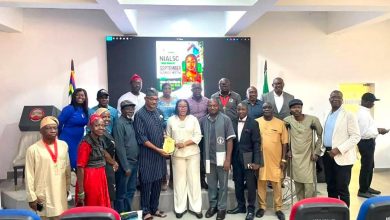
The Lagos State Ministry of Energy and Mineral Resources (MEMR) has reaffirmed its commitment to safer, more resilient and sustainable infrastructure by moving to make subsurface geological and geotechnical investigations mandatory before any infrastructural development across the state.
The commitment was reiterated during a high-level stakeholders’ engagement organised by the ministry with the theme, “Domesticating the Regulation of Pre-requisite Subsurface Geological/Geotechnical Investigation for Infrastructural Development in Lagos State.”
Speaking at the event, the Permanent Secretary of the Ministry of Energy and Mineral Resources, Engr. Mrs. Ibilola Kasunmu, described the engagement as a major step towards institutionalising scientific subsurface investigations as a compulsory requirement for infrastructure development in Lagos State.
Kasunmu noted that Lagos, as one of Africa’s fastest-growing megacities, continues to witness significant investments in roads, bridges, housing, water infrastructure and other critical public assets.
She stressed that every successful infrastructure project must begin with a proper understanding of subsurface conditions.
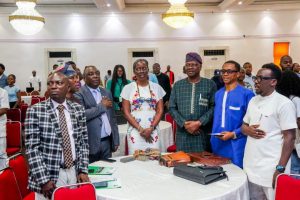
Kasunmu explained that the proposed regulatory framework is designed to strengthen professionalism, improve quality assurance, protect lives and investments, and ensure that geological and geotechnical investigations comply with internationally accepted standards.
The Registrar of the Council of Nigerian Mining Engineers and Geoscientists (COMEG), Prof. Opafunsho Zaccheus, commended the Lagos State Government for taking proactive steps to establish high standards for geological and geotechnical investigations.
He emphasised the importance of collaboration among government, professional bodies, academia and practitioners in promoting public safety and sustainable infrastructure development.
Also speaking, the Registrar of the Council for the Regulation of Engineering in Nigeria (COREN), Engr. Tomide Akinnawa, called for stronger collaboration among the Ministries of Energy and Mineral Resources, Physical Planning and Urban Development, and Works and Infrastructure.

He also clarified the distinction between geological and geotechnical investigations while stressing that professionals should operate within their statutory mandates.
Former Permanent Secretary of the ministry, Engr. Mrs. Abiola Kosegbe, reaffirmed the ministry’s statutory responsibility for coordinating geological services and subsurface investigations in Lagos State, underscoring the need for inter-agency collaboration to promote safe and sustainable infrastructure development.
Representatives of the Ministries of Physical Planning and Urban Development and Housing also pledged support for integrating geological intelligence into planning and construction approval processes.